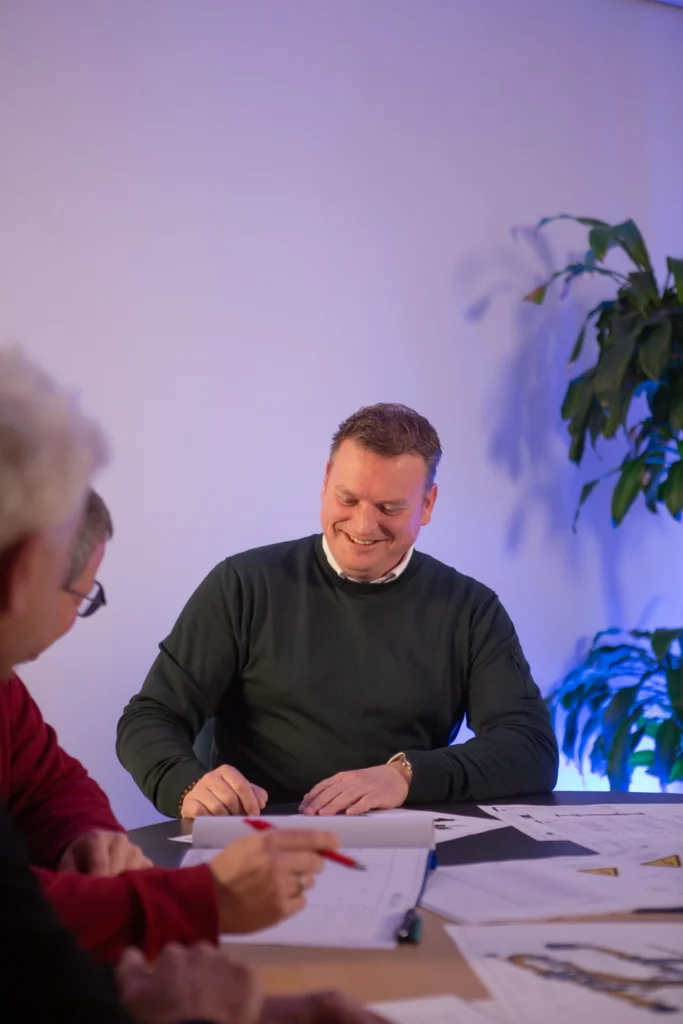
At Vitotherm, it’s not just about technology. It’s about people, solutions, and trust. Vincent Stringa understands that better than anyone. As a representative, he is on the road daily, speaking with companies about burner installations, service inquiries, and practical solutions. His work sits at the intersection of technology, advisory, relationship management, and generating new business through cold acquisition.
His role is broad, but one goal remains central: growing the Vitotherm name. Not only within horticulture, but especially beyond it. “I essentially focus on making the Vitotherm name known in the Dutch market. Beyond horticulture, now also in utilities and industry,” Vincent explains. In doing so, he helps the company explore new markets.
In conversation with Geert Willem van Weert, Managing Director at Vitotherm
When you think of Vitotherm, you think of industrial burners. But behind that technical product is an organization where preparation, flexibility, and craftsmanship take center stage. Geert Willem van Weert, Managing Director at Vitotherm and responsible for the operational realization of all projects, explains how the company distinguishes itself in a constantly evolving market.
In recent weeks, we’ve experienced snow, persistent cold, and now the thaw. For many systems, this was the first real test of the winter.
SCIOS has drawn up clear guidelines for inspections.
Installations with a gas connection (standard fuels):